
The U.S. Environmental Protection Agency (EPA) notes that pest infestations can create health, operational, and financial challenges in residential, commercial, and institutional environments. As facilities become larger and more complex, identifying hidden infestations early has become increasingly difficult. Military installations, government facilities, hospitals, universities, warehouses, and transportation hubs all face the challenge of monitoring large spaces where pests can remain undetected for extended periods.
Traditional inspection methods continue to play an important role, but advances in detection technology are transforming how organizations locate and respond to infestation risks. Resources discussing bed bug treatment services highlight how early identification remains one of the most important factors in successful pest management. Today, emerging monitoring systems, sensors, and data-driven detection tools are helping facilities identify problems before they escalate into costly operational disruptions.
The Problem: Limitations of Traditional Inspections
For decades, visual inspections served as the primary method for identifying pest activity. Trained personnel searched for signs such as droppings, nesting materials, shed skins, bite marks, or structural damage. While effective in many situations, visual inspections have limitations, particularly in large facilities with extensive infrastructure.
Many pests are highly skilled at remaining hidden. Bed bugs can conceal themselves in furniture seams, electrical outlets, wall voids, and equipment storage areas. Rodents often move through utility corridors, ceilings, and mechanical spaces that are difficult to access. Insects may establish colonies inside walls or beneath flooring long before visible evidence appears.
Research published by the National Pest Management Association (NPMA) indicates that early-stage infestations are frequently overlooked because signs are subtle and dispersed across wide areas. In facilities covering thousands of square meters, conducting thorough inspections on a regular basis can require substantial labor and resources.
Human factors also affect inspection reliability. Fatigue, inconsistent procedures, and limited access to concealed areas can all reduce detection accuracy. As facility managers seek more efficient methods, technology is increasingly filling the gap.
The Solution: Emerging Detection Tools and Monitoring Systems
Advancements in sensing technologies, automation, and data analytics are creating new opportunities for early infestation detection. These innovations are designed to complement human expertise while improving monitoring coverage and response times.
Smart Monitoring Devices
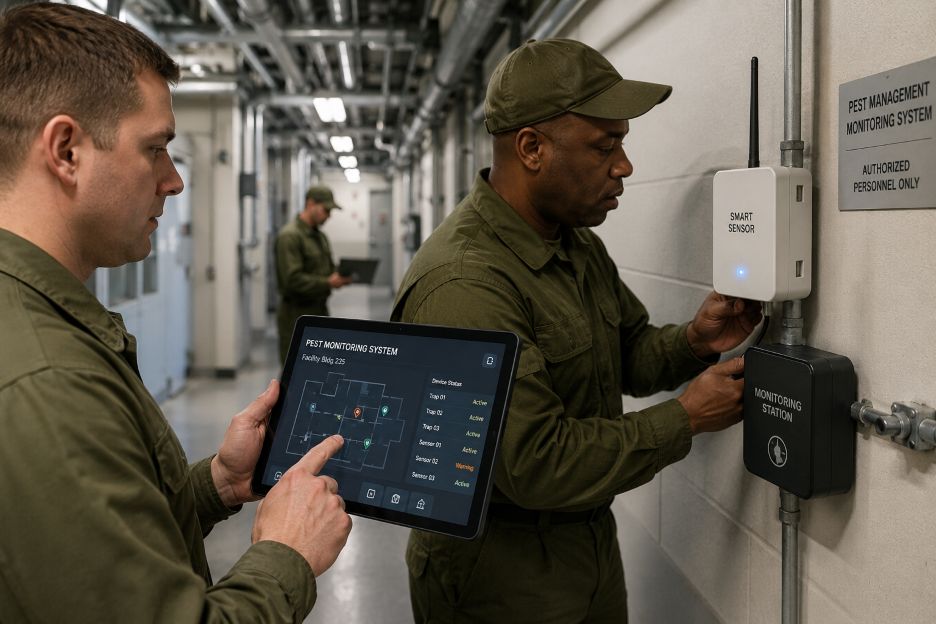
Connected monitoring systems are becoming more common in large facilities. These devices use sensors to detect pest activity and transmit alerts in real time. Some systems monitor movement patterns, temperature changes, humidity levels, or trap activity and send notifications directly to facility managers.
Data from the Centers for Disease Control and Prevention (CDC) emphasizes the value of continuous monitoring in integrated pest management programs. Real-time alerts allow staff to investigate potential issues before infestations spread.
Unlike periodic inspections, smart devices operate continuously. This persistent monitoring improves the likelihood of detecting low-level activity that might otherwise go unnoticed between inspection cycles.
Digital Trap Technologies
Modern pest traps increasingly incorporate electronic monitoring capabilities. Digital traps can record activity, capture images, and communicate data through wireless networks. Some systems automatically report when pests enter a trap, eliminating the need for frequent manual checks.
Experts from the Food and Agriculture Organization of the United Nations (FAO) note that automated monitoring technologies can improve surveillance efficiency in large-scale environments where routine inspections are time-consuming.
These tools provide facility managers with more precise information regarding pest locations, activity levels, and movement trends.
Canine Detection Programs
Technology is not limited to electronics. Specially trained detection dogs remain among the most effective tools for locating hidden bed bug infestations.
Studies referenced by the University of Florida Institute of Food and Agricultural Sciences (UF/IFAS) show that trained canines can identify infestations that are difficult to locate through visual inspection alone. Their ability to detect scent signatures allows inspectors to focus resources on specific areas requiring further investigation.
Many institutions combine canine inspections with electronic monitoring to create a layered detection strategy.
Artificial Intelligence and Data Analytics
Artificial intelligence is beginning to influence pest management operations. AI-driven systems can analyze monitoring data, identify patterns, and predict potential risk areas before visible infestations develop.
Machine learning models may recognize recurring environmental conditions associated with pest activity, including temperature fluctuations, moisture accumulation, or seasonal trends. Facility managers can then target preventive actions more effectively.
As predictive analytics become more sophisticated, organizations gain the ability to move from reactive responses toward proactive risk management.
Applications in Defense and Institutional Facilities
Large institutional environments often face unique pest management challenges due to their size, occupancy levels, and operational requirements.
Defense installations, for example, frequently include housing units, administrative buildings, warehouses, dining facilities, training centers, and transportation infrastructure spread across extensive geographic areas. Monitoring such environments using traditional methods alone can be difficult.
The U.S. Department of Defense has long supported Integrated Pest Management (IPM) programs that emphasize prevention, monitoring, and environmentally responsible control strategies. Technology-enhanced monitoring aligns closely with these objectives by improving surveillance while reducing unnecessary pesticide applications.
Hospitals and healthcare facilities face similar challenges. Hidden infestations can create sanitation concerns and disrupt patient services. Continuous monitoring systems help staff identify activity early while minimizing interruptions to critical operations.
Universities, correctional facilities, government complexes, and transportation networks also benefit from improved detection capabilities. High occupancy rates increase the potential for pests to spread between rooms, buildings, or facilities. Early detection reduces this risk and supports more efficient containment efforts.
Operational Advantages of Advanced Detection Systems
The shift toward technology-assisted detection offers several operational benefits beyond identifying pests more quickly.
- Faster Response Times. Real-time monitoring allows facility managers to investigate alerts immediately. Earlier intervention often prevents minor issues from developing into large-scale infestations.
- Reduced Operational Disruption. Large infestations can require extensive treatment efforts, temporary closures, or relocation of occupants. Early identification helps minimize these disruptions and supports business continuity.
- Improved Resource Allocation. Detection data enables organizations to focus inspections and treatment efforts where they are most needed. Rather than inspecting every area with equal intensity, managers can prioritize locations showing elevated risk indicators.
- Enhanced Documentation and Compliance. Many institutions must maintain records demonstrating compliance with health, safety, and operational standards. Digital monitoring systems automatically generate activity logs and inspection records, simplifying reporting requirements.
- Support for Integrated Pest Management. The Environmental Protection Agency identifies monitoring as a foundational component of Integrated Pest Management programs. Advanced detection technologies strengthen this approach by providing more accurate information for decision-making.
When managers have better data, they can select targeted interventions rather than relying on broad treatment measures.
READ ALSO: Building Service Contractors – Facing Greater Challenges Amidst Global Inflation
Conclusion
Hidden infestations remain a persistent challenge for large facilities, particularly those operating across multiple buildings or expansive campuses. Traditional inspections continue to provide valuable insights, but their limitations become more apparent as facilities grow in size and complexity.
Emerging detection technologies are helping bridge this gap. Smart sensors, connected monitoring systems, digital traps, canine detection programs, and artificial intelligence are improving the speed and accuracy of pest identification. These tools support earlier intervention, reduce operational disruptions, and strengthen integrated pest management strategies.
For defense installations, healthcare facilities, educational institutions, and other large organizations, the future of pest management increasingly depends on data-driven monitoring rather than relying solely on visible signs of infestation. As detection technologies continue to evolve, facilities will be better equipped to identify hidden threats early and maintain safer, more efficient environments.
